The latest blog has been done on wordpress as I was told they have a better service, the blog can be found here: http://wp.me/p8gzfX-F
Thanks,
Tuesday, 10 January 2017

Sunday, 1 January 2017
Speech and swallowing
I start off this post with an apology to those who were looking forward to this post last week, sorry to have disappointed you but I was making the most of the holiday season! With which I wish my 'fan group' happy holidays and a new year! And to those who may not be celebrating anything, happy Sunday!
The connecting part of the body between the brain and spine, the brainstem is an area particularly important for control of speech and if this is damaged there may be speech issues. The typical speech issues caused by dysarthria in MS are:
The first time I developed this symptom with the speech, I wasn't really aware of this issue in this context or that I even had any speech problems and I remember harshly being told to stop acting like a 'baby' as I was mid relapse, very fatigued and hungry asking for something to eat at the time. It is something awkward when talking to people as there are further cognitive issues that can affect speech which are still to be discussed! It has left me being grateful to those people who in a gentle manner ask me to repeat myself rather than the more common response of ' I can't bloody hear you' or ' speak properly' and all things such along them lines. I also remember having to practice speech in the different languages I know of to rehabilitate my speech abilities, with their being difficulty with the pronunciation of letters in Arabic which still last with me till today. Although when I was young, I was the kid who the teacher chose to read the passage being studied and also being the one chosen to be the lead in a group singing project or play ( not trying to 'big' myself up just mentioning!) but now I am grateful if I can successfully speak to a person comfortably!SwallowingThe ability to swallow is another thing we wouldn't really think about and it can be one that occurs with the speech issues after the relevant damage, these issues can occur at a relapse stage and go away and never return but can also occur and remain for a lasting period of time. The swallowing issues may include:
The swallowing symptoms can result in foods 'going down the wrong pipe' and in severe cases patients would be fed via a tube through their nose to their stomach. If food goes down the windpipe by accident due to these symptoms it can lead to things like infections which can induce pseudo relapses ( still to be discussed!) and weight loss due to being unable to eat properly can be an issue.
That's this post done but I just wanted to mention, the further posts will be discussing symptoms mainly sourced at the cognitive side of MS and perhaps matters that are taboo or awkward will be discussed, so in a time where many serious things are almost laughed at I do ask for maturity with the coming content as yes it has unfortunately been a bit of a 'joke' to some when I felt stating the reality of things was the best way to go!
Speech issue examples: https://www.youtube.com/watch?v=QPLAcZiK2Nw
https://www.youtube.com/watch?v=UF0G-u0hBns&t=29s
So to start off, speech from a physical and a mental viewpoint. There are two noted down types of speech issues with MS: Speech dysarthria and speech dyphasia.
Speech dysarthria is an issue with speech caused by damage to one part of the brain which can affect the muscles of the tongue and lips so making it difficult to pronounce precise sounds. Damage to another part can weaken the diaphragm which can affect breath control and volume.The connecting part of the body between the brain and spine, the brainstem is an area particularly important for control of speech and if this is damaged there may be speech issues. The typical speech issues caused by dysarthria in MS are:
- slurred, imprecise or slower speech
- low volume or weak voice
- difficulty with resonance and pitch control
- sounding like you're speaking through the nose
- long pauses between words, or between syllables
Along with these symptoms, side effects of drugs used to treat other symptoms may cause things like a dry mouth resulting in more issues with speech.
The first time I developed this symptom with the speech, I wasn't really aware of this issue in this context or that I even had any speech problems and I remember harshly being told to stop acting like a 'baby' as I was mid relapse, very fatigued and hungry asking for something to eat at the time. It is something awkward when talking to people as there are further cognitive issues that can affect speech which are still to be discussed! It has left me being grateful to those people who in a gentle manner ask me to repeat myself rather than the more common response of ' I can't bloody hear you' or ' speak properly' and all things such along them lines. I also remember having to practice speech in the different languages I know of to rehabilitate my speech abilities, with their being difficulty with the pronunciation of letters in Arabic which still last with me till today. Although when I was young, I was the kid who the teacher chose to read the passage being studied and also being the one chosen to be the lead in a group singing project or play ( not trying to 'big' myself up just mentioning!) but now I am grateful if I can successfully speak to a person comfortably!SwallowingThe ability to swallow is another thing we wouldn't really think about and it can be one that occurs with the speech issues after the relevant damage, these issues can occur at a relapse stage and go away and never return but can also occur and remain for a lasting period of time. The swallowing issues may include:
- Changes in your speech (which go hand in hand with small changes in swallowing)
- Problems chewing
- Food sticking in your throat
- Food or drink coming back up
- Sluggish movement of food going down, or difficulty moving food back through your mouth
- Coughing and spluttering during and after eating
- Excessive saliva, which may cause dribbling
The swallowing symptoms can result in foods 'going down the wrong pipe' and in severe cases patients would be fed via a tube through their nose to their stomach. If food goes down the windpipe by accident due to these symptoms it can lead to things like infections which can induce pseudo relapses ( still to be discussed!) and weight loss due to being unable to eat properly can be an issue.
That's this post done but I just wanted to mention, the further posts will be discussing symptoms mainly sourced at the cognitive side of MS and perhaps matters that are taboo or awkward will be discussed, so in a time where many serious things are almost laughed at I do ask for maturity with the coming content as yes it has unfortunately been a bit of a 'joke' to some when I felt stating the reality of things was the best way to go!
Speech issue examples: https://www.youtube.com/watch?v=QPLAcZiK2Nw
https://www.youtube.com/watch?v=UF0G-u0hBns&t=29s
Sunday, 18 December 2016
More than just a pain in the butt! Pain and MS.
Pain and multiple sclerosis, really is a bit of a pain in the head wondering how to put this forward (just to mention metaphorically speaking!). Like many things in MS they sound like things normal, average, healthy, living being thing would go through but with MS there always is that little extra bit of spice.
Like all the symptoms there are different avenues to their cause and they vary in severity but all are due to damaged nerves, pain in MS can be in different ways and forms which will be discussed below. But to start, a few ways in which an MSer may describe the pain they feel: Squeezing or crushing, Cold,Hot or burning, Sharp, Dull, Like ants under my skin or ‘creepy crawlies’, Like a build up of pressure, Stabbing, Creeping, Like an electric shock, Aching, Pins and needles. Those are the few that are noted down!
Optic neuritis again for starters; when the optic nerve or any nerve in that matter is damaged it is known to be 'inflamed'. Due to this symptom, an MSer may not even realise a vision loss but they will most definetely complain of the pain, especially immediately after damage episode starts. Simply put when we move an eye to change direction or look at something else or in some cases look to your far left or right/ up or down, there is an extreme burning like feeling like your eye is being pulled out by a hook from the side.
Next being trigeminal neuralgia pain,the trigeminal nerve is the nerve that is responsible for the sensation your face. If this nerve is inflamed it can leave a sharp stabbing pain on your face, it has been described as one of the worst types of pain a human can face. Damage to the brain stem can also result in this symptom, this type of pain can lead to an MSer thinking there's something wrong with their teeth or jaw and in my case being a bit of a yo-yo between the dentist and the GP.
Then there's the 'MS hug', it is everything but as nice as your normal hug. A feeling of being crushed or squeezed due to damage in the spinal cord, a lesion on the spine leading to a painful band around the chest. At first an MSer may get very worried thinking it's due to issues with their heart and thus get sent for ECG scans to make sure their heart is beating properly! Especially being of an Asian heritage known for our food fancies and heart issues it can be even more worrying!
Lhermitte's pain, Lhermitte being a European guy that is dead. But the Lhermittes phenomenon is something that is seen in MS and related spinal injuries. This is when an MSer were to move their neck, to look up, left or right and a quick zip ( electric shock type) from the neck down to the toes, so people who may have this symptom may do whatever it takes to keep their neck straight and not move it.
Burning limb pain; not a specific pain but due to damage anywhere on the sensory pathways, it can lead to abnormal weird, ' ouchy' feeling. Something that is hard to describe, sometimes best describe as a leg not feeling right and being really painful.
Only few more to go! With the recently mentioned spasticity symptom when the muscles may be almost at war with each other ( one part wanting to relax and the other contract) it can lead to a type of pain. To put things in context if anyone ever wanted to get an idea of this type of pain and had 5 hours or so to spare, clinch a fist for 5 hours and try to open your hand or click your fingers and a similar type of pain can be felt, this would also cause painful cramps in an MSer but it is somewhat a normal thing for an MSer with this symptom.
Almost done now! Due to the nerve damage in the brain, it can cause random migraine like pain and this may be the only type in which the 'cure for all conditions' for people of the subcontinent (stereo typically!) may be helpful for, yes Paracetamol!
More secondary pain may be knock on effects of other symptoms, like bruises or cuts on the body from falling over or a limp in the walking pattern ( due to symptoms like foot drop or 'gait' issues [still to be mentioned don't be frightened!]) resulting in pain in joints due to an abnormal 'rubbing' on the knees or hips whilst walking ( see for video for example below).
This would probably sum up the pain related symptoms of MS: Neuropathic pain is caused by MS nerve damage in the brain and spinal cord. Nerve damage might cause a range of sensations, from minor irritations to intense sharp or burning pains.
Lastly, I promise! The drugs used for these symptom can have very severe side effects, though I won't go into too much depth now but for neuropathic pain which can be anywhere there is damage, a very common and vouched for 'homeopathic' or complementary treatment that is used is marijuana, I was approached by a 'dealer who somehow heard of me and MS and told me he had a lot of customers with MS and offered me his details. I will be unfortunately or fortunately have to be a a killjoy so marijuana, drugs and MS will be saved for a sunny day hopefully! I apologise if this does hurt to read, but this is multiple sclerosis!
https://www.youtube.com/watch?v=CuuNtaLvwA8
Like all the symptoms there are different avenues to their cause and they vary in severity but all are due to damaged nerves, pain in MS can be in different ways and forms which will be discussed below. But to start, a few ways in which an MSer may describe the pain they feel: Squeezing or crushing, Cold,Hot or burning, Sharp, Dull, Like ants under my skin or ‘creepy crawlies’, Like a build up of pressure, Stabbing, Creeping, Like an electric shock, Aching, Pins and needles. Those are the few that are noted down!
Optic neuritis again for starters; when the optic nerve or any nerve in that matter is damaged it is known to be 'inflamed'. Due to this symptom, an MSer may not even realise a vision loss but they will most definetely complain of the pain, especially immediately after damage episode starts. Simply put when we move an eye to change direction or look at something else or in some cases look to your far left or right/ up or down, there is an extreme burning like feeling like your eye is being pulled out by a hook from the side.
Next being trigeminal neuralgia pain,the trigeminal nerve is the nerve that is responsible for the sensation your face. If this nerve is inflamed it can leave a sharp stabbing pain on your face, it has been described as one of the worst types of pain a human can face. Damage to the brain stem can also result in this symptom, this type of pain can lead to an MSer thinking there's something wrong with their teeth or jaw and in my case being a bit of a yo-yo between the dentist and the GP.
Then there's the 'MS hug', it is everything but as nice as your normal hug. A feeling of being crushed or squeezed due to damage in the spinal cord, a lesion on the spine leading to a painful band around the chest. At first an MSer may get very worried thinking it's due to issues with their heart and thus get sent for ECG scans to make sure their heart is beating properly! Especially being of an Asian heritage known for our food fancies and heart issues it can be even more worrying!
Lhermitte's pain, Lhermitte being a European guy that is dead. But the Lhermittes phenomenon is something that is seen in MS and related spinal injuries. This is when an MSer were to move their neck, to look up, left or right and a quick zip ( electric shock type) from the neck down to the toes, so people who may have this symptom may do whatever it takes to keep their neck straight and not move it.
Burning limb pain; not a specific pain but due to damage anywhere on the sensory pathways, it can lead to abnormal weird, ' ouchy' feeling. Something that is hard to describe, sometimes best describe as a leg not feeling right and being really painful.
Only few more to go! With the recently mentioned spasticity symptom when the muscles may be almost at war with each other ( one part wanting to relax and the other contract) it can lead to a type of pain. To put things in context if anyone ever wanted to get an idea of this type of pain and had 5 hours or so to spare, clinch a fist for 5 hours and try to open your hand or click your fingers and a similar type of pain can be felt, this would also cause painful cramps in an MSer but it is somewhat a normal thing for an MSer with this symptom.
Almost done now! Due to the nerve damage in the brain, it can cause random migraine like pain and this may be the only type in which the 'cure for all conditions' for people of the subcontinent (stereo typically!) may be helpful for, yes Paracetamol!
More secondary pain may be knock on effects of other symptoms, like bruises or cuts on the body from falling over or a limp in the walking pattern ( due to symptoms like foot drop or 'gait' issues [still to be mentioned don't be frightened!]) resulting in pain in joints due to an abnormal 'rubbing' on the knees or hips whilst walking ( see for video for example below).
This would probably sum up the pain related symptoms of MS: Neuropathic pain is caused by MS nerve damage in the brain and spinal cord. Nerve damage might cause a range of sensations, from minor irritations to intense sharp or burning pains.
Musculoskeletal pain is the pain in muscles and joints that comes from living with the stresses and strains MS places on the body. For example, difficulties with balance, fatigue or muscle weakness could lead to problems with posture, putting a strain on joints, ligaments or other muscles.
Lastly, I promise! The drugs used for these symptom can have very severe side effects, though I won't go into too much depth now but for neuropathic pain which can be anywhere there is damage, a very common and vouched for 'homeopathic' or complementary treatment that is used is marijuana, I was approached by a 'dealer who somehow heard of me and MS and told me he had a lot of customers with MS and offered me his details. I will be unfortunately or fortunately have to be a a killjoy so marijuana, drugs and MS will be saved for a sunny day hopefully! I apologise if this does hurt to read, but this is multiple sclerosis!
https://www.youtube.com/watch?v=CuuNtaLvwA8
Sunday, 11 December 2016
Fatigue and sleep.
Why are you tired, you didn't do anything today? What do you mean you're tired, it's not like you go to work or anything? Just a few statements me and perhaps others with MS receive on a regular basis when we are trying to deal with life under fatigue because of MS!
You may think tiredness yes but fatigue is something far from just basic tiredness. One may think all that is needed to deal with tiredness would be a good nights sleep right? Anything but when it comes to MS.
Getting more into things, fatigue can be described as an overwhelming sense of tiredness with no obvious cause. This may have a mental, cognitive or physical exacerbation of symptoms for a period of time that the fatigue is lingering. This could be heavy limbs, balance or sight issues or concentration problems. Fatigue can also leave an MSer having a nice long and fruitful 8 hour sleep only to wake up feeling as gruggy as you did beforehand. And along with other symptoms fatigue can help slow down the process of waking up in the mornings, so for example the mind being fresh but the legs forever taking whatever means to wake up a bit later.
Fatigue affects people in different ways, and it may change from week to week, day to day, or hour to hour. The reason for fatigue in MS is still fairly unknown but there are a few slightly proven theories ( proven by scientific study but not completely identifying a certain cause). Primarily a result of damage caused by MS, a thought that damage to certain areas of the brain are associated with fatigue in MS. Another being that fatigue is caused by the way in which the brain adapts to the damage, simply put the way I saw and thought of it, the extra work required to send signals over damaged pathways leading to fatigue. MRI scans have shown MSers who suffer from fatigue ( the majority just to note) that larger areas of the brain are used for carrying out activities than people who don't suffer with this symptom.
Fatigue like all MS symptoms vary from person to person, some are exhausted (in the MS sense!) by going to the shop, some by preparing something to eat and some by merely standing up. Fatigue is a symptom that isn't very tangible, many times I am asked by people if I feel fatigued, but usually the fatigue would result in a difficulty giving a yes or no answer! Past the usual comments I would receive like I shouldn't have slept/ woken up so late or should've completed my meal, a lot of the time fatigue can halt or cause problems in carrying out small 'normal' and 'basic' actions. To add further, after I tiresome day of doing 'nothing' sometimes, fatigue can stop an MSer from falling asleep properly! It can induce other symptoms like pain, spasms, bladder issues, spasticity or heat intolerance ( ignore the ones not yet discussed!) and thus leave a pretty double sided sword if anything, and to mention further; psychological impacts also affecting the sleep and fatigue, things like depression or anxiety which could be another thing caused by MS in more abnormal ways ( still to be discussed and I do look forward to it!) that could result in feeling more fatigue and not being able to fall asleep.
I know for many, sleep is the best part of the day ( or night) along with the above mentioned things that affect sleep, there are further symptoms that may disrupt the quiet time we get in our days, everything but checking Facebook or Twitter before bed! Restless leg syndrome being an overwhelming, irresistible urge to move the legs ( or arms in some cases), this due to the short circuit effect because of damage, this isn't restricted to the night but it obvioisly would make sleeping harder.Lastly sleep apnea, where the regular breathing pattern of a human is 'off chord' whilst asleep, this affects the amount of oxygen that enters the blood, this may wake a person up mid sleep with a choke feeling to get the airways working again or occur without notice, but it can have an effect on the person the following day, the accomplished sleep feeling isn't felt due this symptom.
I think I've went on a bit too long today, would try lie down but I don't think I'd fall asleep so easily, but honestly, as fatigue can impact the whole bodily systems working, it has made me forget the more entertaining parts of my blog but hey, just one of the joys of MS!
Sleep apnea: https://www.youtube.com/watch?v=TgC_S09Xea4
RLS: https://www.youtube.com/watch?v=Pqke9lRn1h8
You may think tiredness yes but fatigue is something far from just basic tiredness. One may think all that is needed to deal with tiredness would be a good nights sleep right? Anything but when it comes to MS.
Getting more into things, fatigue can be described as an overwhelming sense of tiredness with no obvious cause. This may have a mental, cognitive or physical exacerbation of symptoms for a period of time that the fatigue is lingering. This could be heavy limbs, balance or sight issues or concentration problems. Fatigue can also leave an MSer having a nice long and fruitful 8 hour sleep only to wake up feeling as gruggy as you did beforehand. And along with other symptoms fatigue can help slow down the process of waking up in the mornings, so for example the mind being fresh but the legs forever taking whatever means to wake up a bit later.
Fatigue affects people in different ways, and it may change from week to week, day to day, or hour to hour. The reason for fatigue in MS is still fairly unknown but there are a few slightly proven theories ( proven by scientific study but not completely identifying a certain cause). Primarily a result of damage caused by MS, a thought that damage to certain areas of the brain are associated with fatigue in MS. Another being that fatigue is caused by the way in which the brain adapts to the damage, simply put the way I saw and thought of it, the extra work required to send signals over damaged pathways leading to fatigue. MRI scans have shown MSers who suffer from fatigue ( the majority just to note) that larger areas of the brain are used for carrying out activities than people who don't suffer with this symptom.
Fatigue like all MS symptoms vary from person to person, some are exhausted (in the MS sense!) by going to the shop, some by preparing something to eat and some by merely standing up. Fatigue is a symptom that isn't very tangible, many times I am asked by people if I feel fatigued, but usually the fatigue would result in a difficulty giving a yes or no answer! Past the usual comments I would receive like I shouldn't have slept/ woken up so late or should've completed my meal, a lot of the time fatigue can halt or cause problems in carrying out small 'normal' and 'basic' actions. To add further, after I tiresome day of doing 'nothing' sometimes, fatigue can stop an MSer from falling asleep properly! It can induce other symptoms like pain, spasms, bladder issues, spasticity or heat intolerance ( ignore the ones not yet discussed!) and thus leave a pretty double sided sword if anything, and to mention further; psychological impacts also affecting the sleep and fatigue, things like depression or anxiety which could be another thing caused by MS in more abnormal ways ( still to be discussed and I do look forward to it!) that could result in feeling more fatigue and not being able to fall asleep.
I know for many, sleep is the best part of the day ( or night) along with the above mentioned things that affect sleep, there are further symptoms that may disrupt the quiet time we get in our days, everything but checking Facebook or Twitter before bed! Restless leg syndrome being an overwhelming, irresistible urge to move the legs ( or arms in some cases), this due to the short circuit effect because of damage, this isn't restricted to the night but it obvioisly would make sleeping harder.Lastly sleep apnea, where the regular breathing pattern of a human is 'off chord' whilst asleep, this affects the amount of oxygen that enters the blood, this may wake a person up mid sleep with a choke feeling to get the airways working again or occur without notice, but it can have an effect on the person the following day, the accomplished sleep feeling isn't felt due this symptom.
I think I've went on a bit too long today, would try lie down but I don't think I'd fall asleep so easily, but honestly, as fatigue can impact the whole bodily systems working, it has made me forget the more entertaining parts of my blog but hey, just one of the joys of MS!
Sleep apnea: https://www.youtube.com/watch?v=TgC_S09Xea4
RLS: https://www.youtube.com/watch?v=Pqke9lRn1h8
Sunday, 4 December 2016
Muscle spasticity/ stiffness and spasms
Before we start, a video explaining MS in a few seconds I forgot to add in a long time ago ( If videos don't play see the links below):
I'm sure you would know by now especially it is far from beng a monkey scrotum! Muscles, muscles, muscles. What would we do without them? Or what if they didn't work as we plan to use them? The final more specific muscle related symptoms to be discussed, though just like our nerves, muscles are involved in most things in life and another part of the body that is an avenue to the long list of symptoms associated with MS!
Muscle spasticity/ neuro spasticity being an increased tone (resistance or tension in the muscle) due to the damaged or dead nerves along the signal pathway(s) to area involved. But simply meaning when the muscles are used, there is more resistance to the movement and the muscles feel more rigid.
Stiffness being pretty much a similar thing where due to muscle resistance they are slower to relax so simply put it can make fine movements more difficult to perform, like lifting your leg up to get in or out of a car or straightening your legs to stand up from a chair. Other more explicit movements like walking can also be affected by the stiffness, as you can probably imagine it would lead to walking a bit like a robot in the sense that the muscles would keep straight and not follow a normal walking pattern.
To give more of a understandable example; if a healthy person were to lift their fist towards their shoulder almost like to show off your muscles, the muscles on the front of the arm will tighten and the ones on the back would relax. However a person suffering with spasticity did the same when this is done the muscle in the whole arm would tighten and the same time, so the muscle thus is very 'rigid'.
Another example to show the effects of this symptom, if a person where to stretch for a training session, when stretching the tendon ( the muscle on the other side of the shin [the back] they would be able to feel a stretch happening so to speak, but with this symptom the motion can be carried out but there be no feeling of any changes at all.

Spasms being random jerks in uncontrollable ways, somewhat similar to tremors however a different bodily function involved and more random than that of the tremors. These can be minor like a constant tapping of the foot which is known as 'clonus' or quite major where the whole limb or two may suddenly jerk resulting in a bit of pain and embarrassment if around other people! Though me being me, I have warned a few of my close friends that if they do frustrate me, I'd give them a good slap and blame it on the spasm effect!
Though thankfully I do not suffer so severely this symptom but recalling a discussion in a meet up group of MSers, where a gentleman with SPMS and his wife, told us their stories of the wife waking him up at 3am in the morning to tell him off for giving her a hurtful kick whilst fast asleep!
I'm sure you would know by now especially it is far from beng a monkey scrotum! Muscles, muscles, muscles. What would we do without them? Or what if they didn't work as we plan to use them? The final more specific muscle related symptoms to be discussed, though just like our nerves, muscles are involved in most things in life and another part of the body that is an avenue to the long list of symptoms associated with MS!
Muscle spasticity/ neuro spasticity being an increased tone (resistance or tension in the muscle) due to the damaged or dead nerves along the signal pathway(s) to area involved. But simply meaning when the muscles are used, there is more resistance to the movement and the muscles feel more rigid.
Stiffness being pretty much a similar thing where due to muscle resistance they are slower to relax so simply put it can make fine movements more difficult to perform, like lifting your leg up to get in or out of a car or straightening your legs to stand up from a chair. Other more explicit movements like walking can also be affected by the stiffness, as you can probably imagine it would lead to walking a bit like a robot in the sense that the muscles would keep straight and not follow a normal walking pattern.
To give more of a understandable example; if a healthy person were to lift their fist towards their shoulder almost like to show off your muscles, the muscles on the front of the arm will tighten and the ones on the back would relax. However a person suffering with spasticity did the same when this is done the muscle in the whole arm would tighten and the same time, so the muscle thus is very 'rigid'.
Another example to show the effects of this symptom, if a person where to stretch for a training session, when stretching the tendon ( the muscle on the other side of the shin [the back] they would be able to feel a stretch happening so to speak, but with this symptom the motion can be carried out but there be no feeling of any changes at all.
Spasms being random jerks in uncontrollable ways, somewhat similar to tremors however a different bodily function involved and more random than that of the tremors. These can be minor like a constant tapping of the foot which is known as 'clonus' or quite major where the whole limb or two may suddenly jerk resulting in a bit of pain and embarrassment if around other people! Though me being me, I have warned a few of my close friends that if they do frustrate me, I'd give them a good slap and blame it on the spasm effect!
Clonus:
Though thankfully I do not suffer so severely this symptom but recalling a discussion in a meet up group of MSers, where a gentleman with SPMS and his wife, told us their stories of the wife waking him up at 3am in the morning to tell him off for giving her a hurtful kick whilst fast asleep!
Spasm examples:
A lot more extreme example. watch with caution:
Sunday, 27 November 2016
Tremor, ‘butter fingers & more manual dexterity issues.
Back when I was in my second year of college ( sounds like a long time ago but feels like yesterday!) I mentioned to a fellow classmate in Biology that I have MS, his response? How come you're not shaking! I still don't really understand what he meant but the obvious symptom that did come to mind was that of the 'tremors'.
On first thought tremor just means a bit of shaking somewhere literally right? But as I'm sure you'd know by now things are never so simple with anything related to multiple sclerosis. Tremors aren't the only reason there may be a bit of 'shaking' occuring but the first and main one I reckon would be the tremors.
So, a tremor would be described as a trembling or shaking movement that can't be controlled in the affected muscle. Usually in a rhythmic shaking either fine small movements or larger more explicit ones. This would be due to a damaged nerve(s) somewhere along the neurological pathway to the muscle that is concerned.
Furthermore, there are two types of these tremors. An intention tremor where an MSer is intending to do something like switch a light on and the tremor worsening as the hand gets closer to the object. Postural tremor, where the muscles are trying to hold part of the body still against the force of gravity and just has the odd wiggle because of the main reason of most symptoms, the short circuit reaction.
Ataxia is a term for a group of disorders that affect co-ordination, balance and speech thus the tremor, along with the tremors and the previous loss of sensationor any other related symptoms, this leaves an MSer with the infamous butter finger trait, so it would make sense if things don't last long in our hands, we miss the hand when reaching for a handshake, turning a page or untangling your headphones becoming a bit like an Olympic sport!
With me it just happened to occur in its more severe state ( post relapse) at the ending of winter, so I had a lot of people telling me to bring a pair of gloves, or wear extra clothing next time I left the house! But when I did have these tremors it was difficult to hold the phone straight or bring a cup of tea to the table, it almost frightened a few folk around me resulting in them grabbing my hand to hold it straight, which reminded me of something that's done whenever there is a mouse, spider or lizard ( yes in India and so these are common household guests! Though a stick or brush is used!) and a rush movement to grab them or hit them is usually the typical response now displayed when my hand couldn't stop dancing around!
These two videos below showing examples of the tremors and their effects:
https://www.youtube.com/watch?v=6dmZMK6FNps
https://www.youtube.com/watch?v=01ojuCnMonM
On first thought tremor just means a bit of shaking somewhere literally right? But as I'm sure you'd know by now things are never so simple with anything related to multiple sclerosis. Tremors aren't the only reason there may be a bit of 'shaking' occuring but the first and main one I reckon would be the tremors.
So, a tremor would be described as a trembling or shaking movement that can't be controlled in the affected muscle. Usually in a rhythmic shaking either fine small movements or larger more explicit ones. This would be due to a damaged nerve(s) somewhere along the neurological pathway to the muscle that is concerned.
Furthermore, there are two types of these tremors. An intention tremor where an MSer is intending to do something like switch a light on and the tremor worsening as the hand gets closer to the object. Postural tremor, where the muscles are trying to hold part of the body still against the force of gravity and just has the odd wiggle because of the main reason of most symptoms, the short circuit reaction.
Ataxia is a term for a group of disorders that affect co-ordination, balance and speech thus the tremor, along with the tremors and the previous loss of sensationor any other related symptoms, this leaves an MSer with the infamous butter finger trait, so it would make sense if things don't last long in our hands, we miss the hand when reaching for a handshake, turning a page or untangling your headphones becoming a bit like an Olympic sport!
With me it just happened to occur in its more severe state ( post relapse) at the ending of winter, so I had a lot of people telling me to bring a pair of gloves, or wear extra clothing next time I left the house! But when I did have these tremors it was difficult to hold the phone straight or bring a cup of tea to the table, it almost frightened a few folk around me resulting in them grabbing my hand to hold it straight, which reminded me of something that's done whenever there is a mouse, spider or lizard ( yes in India and so these are common household guests! Though a stick or brush is used!) and a rush movement to grab them or hit them is usually the typical response now displayed when my hand couldn't stop dancing around!
These two videos below showing examples of the tremors and their effects:
https://www.youtube.com/watch?v=6dmZMK6FNps
https://www.youtube.com/watch?v=01ojuCnMonM
Sunday, 20 November 2016
Balance problems and dizziness (vertigo, drunkard disease)
Most people with MS are regularly perceived to being drunk and having ' a bit too many'. This is all due to the balance problems that can be seen and the effect of 'dizziness' that is experienced. Something we would hardly realise or even think about is the complexity of our balance and our human ability to stand up straight without wobbling over. MS at a time was known as the 'drunkard disease' because of symptoms based on these points below.

For normal balance (just to clarify, on two legs not one!) there are different parts of the human body that work together; Information your brain receives and the replies it sends out can be late, incomplete or misleading. The messages being passed inside your brain can also be disrupted, which affects the way it processes balance information. we can put this into three groups to make things that tiny bit easier to understand! The input, processing and the output, not as simple as baking a cake unfortunately but regardless, here we go!
The input consists of three avenues and these are; vision - the symptoms left by ON can give confusing information to the brain that would try to understand incomplete or disrupted signals - the inner ear - which updates our brains of the angle and position of our heads, disruption or missing information can lead to balance issues- and sensory changes - if you can't feel things properly then signals needed by the brain to make us stay straight aren't received properly or at all - thus MSers tend to wobble around or remain completely stagnant for our own safety ( on a wheelchair, or using walking aids to help us walk straight, well just about).
Processing of the messages sent by the NS are vital for our brains to process the right information. Damage to the cerebellum ( at the base of the brain, see picture below) or the brain stem can lead to symptoms like vertigo ( slight movements making your body feel like it is on a rollercoaster) or nausea. Similar to the way a person who gets travel sick or sea sick would feel as their body finds it hard to process the information of being stable but moving ( on water or road) at the same time.
Output, as already stated the muscles respond in a delayed manner or not at all due to neurological damage and more specific symptoms ( which we still have to discuss) the muscles aren't able to respond to messages from the brain properly so the MSer with the damaged system thus looks drunk if anything. I look drunk all the time; I have an excuse for walking into things/ people or tripping to my right when taking a left in the corridor but I've never had a 'drink' in my life!
Usually when I do seem to be toppling over, something very much expected with MS I'm told I didn't eat enough food or told to slow down, it has been a very long time since I've rushed to do anything believe me!
Unfortunately, I try my best but all posts can't be so funny and entertaining, some like this have to be just plain and boring! Till next week guys!
Unfortunately, I try my best but all posts can't be so funny and entertaining, some like this have to be just plain and boring! Till next week guys!
Sunday, 13 November 2016
Optic neuritis, nystagmus and the scary stuff!
Moving on, optic neuritis. Yes as you could have guessed, the eyes! This occurs when there is a relapse primarily affecting the part(s) of the brain that are involved in sight and vision.
The main symptoms that occur from this would be either blurred, double or complete loss of vision in either one of the eyes ( depending on which one gets 'attacked'). This too is usually one of the onset symptoms of MS and thus many (like me) MSers would be diagnosed after referrals from an ophthalmologist ( a medical doctor who specialises in eye care), an optician ( though the one I saw told me my glasses were dirty!) or even the GP to get further tests to check for nerve damage.
As discussed before, the nerve damage never completely recovers so this damage can leave a lasting damage with unclear vision and 'nystagmus'. This is basically when the pupils of the eyes randomly like to have a bit of a dance, Nystagmus most commonly causes the eyes to look involuntarily from side to side in a rapid, swinging motion rather than staying fixed on an object or person. Some nystagmuses, however, cause the eyes to jerk sideways or up and down.
The slightly scary stuff ( especially if your frightened of insects and horror movies!) is due to the nystagmus, your eyes may 'lie' to you, so with my experience; I thought there were beetles crawling all over my bedside wall and when I prepared to give them a whack, turned to see an empty plain wall as it was meant to be!
Not stopping there, if there is damage in other parts of the brain, it can lead to a transmission issue, so as when a human would see things, that message is sent to our brains to figure out what it is, and with damage in the right ( or wrong!) places, one could end up 'seeing' things because of the disruption and the 'short circuiting' analogy discussed earlier. So going past the pond near my house, the tree branches do look a bit like a scarecrow or a ghost on the initial look. Yes can be a bit frightening so the need to remind yourself your eyes are lying to you can be helpful! And focusing the eyes to see it's just a tree!
Last but not least, the makeshift medical advise to frighten you when you are already quite scared; because through my GCSEs and SATs and pretty much all my studies, I found online resources really helpful to revise and as you could probably guess, I am a bit of a nerd so I spent quite some time revising and because I used the computer, phone or even study without a lot of light so according to some, this was why my body decided to go AWOL. To add, the urge to itch the eyes were somehow making things worse along with the covering of the damaged eye with tissue being something supposedly problematic leaving me with old Indian remedies for 'relief' of symptoms which were laughed off and very much dis advised by the more professional doctors, and the need to learn how to ignore people after the many comments about wearing glasses meaning I should have perfect vision!
Whether you're enjoying things so far or not, we really are only getting started still! I think by the end you'd be experts at making caffeinated drinks!


The main symptoms that occur from this would be either blurred, double or complete loss of vision in either one of the eyes ( depending on which one gets 'attacked'). This too is usually one of the onset symptoms of MS and thus many (like me) MSers would be diagnosed after referrals from an ophthalmologist ( a medical doctor who specialises in eye care), an optician ( though the one I saw told me my glasses were dirty!) or even the GP to get further tests to check for nerve damage.
As discussed before, the nerve damage never completely recovers so this damage can leave a lasting damage with unclear vision and 'nystagmus'. This is basically when the pupils of the eyes randomly like to have a bit of a dance, Nystagmus most commonly causes the eyes to look involuntarily from side to side in a rapid, swinging motion rather than staying fixed on an object or person. Some nystagmuses, however, cause the eyes to jerk sideways or up and down.
The slightly scary stuff ( especially if your frightened of insects and horror movies!) is due to the nystagmus, your eyes may 'lie' to you, so with my experience; I thought there were beetles crawling all over my bedside wall and when I prepared to give them a whack, turned to see an empty plain wall as it was meant to be!
Not stopping there, if there is damage in other parts of the brain, it can lead to a transmission issue, so as when a human would see things, that message is sent to our brains to figure out what it is, and with damage in the right ( or wrong!) places, one could end up 'seeing' things because of the disruption and the 'short circuiting' analogy discussed earlier. So going past the pond near my house, the tree branches do look a bit like a scarecrow or a ghost on the initial look. Yes can be a bit frightening so the need to remind yourself your eyes are lying to you can be helpful! And focusing the eyes to see it's just a tree!
Last but not least, the makeshift medical advise to frighten you when you are already quite scared; because through my GCSEs and SATs and pretty much all my studies, I found online resources really helpful to revise and as you could probably guess, I am a bit of a nerd so I spent quite some time revising and because I used the computer, phone or even study without a lot of light so according to some, this was why my body decided to go AWOL. To add, the urge to itch the eyes were somehow making things worse along with the covering of the damaged eye with tissue being something supposedly problematic leaving me with old Indian remedies for 'relief' of symptoms which were laughed off and very much dis advised by the more professional doctors, and the need to learn how to ignore people after the many comments about wearing glasses meaning I should have perfect vision!
Whether you're enjoying things so far or not, we really are only getting started still! I think by the end you'd be experts at making caffeinated drinks!

Example of blurred vision on the left.

The lasting damaged vision difference between normal(left) and Optic neuritis (ON) eye.

A test given to check for vision issues, also used to test for colour blindness.
Sunday, 6 November 2016
Let's get started: symptoms.
What actually makes living with MS difficult, problematic and very abnormal? Quite obviously the symptoms. Simply put but far from that it if anything. Most people when seeing an MSer would see the condition from a more physical perspective, thus a very common stereotype of people with MS being wheelchair bound. But in reality the foundations of MS are physical, mental and emotional.
Based on the basic knowledge of the anatomy of the central nervous system and the posts covered so far ( be it even by background knowledge), one would presume physical symptoms are due to damage in the spine, mental ones the brain and emotional ones due to the change in social standing an MSer is left with.
However the symptoms all have their own specific damage source and some really minute physical ones may be due to damage in certain areas of the brain. For example, the 'drunkard walk' being due to damage in the base of the brain rather than just the spine or legs. Mental ones due to cognitive implications and emotional ones due the same reasons. Furthermore, the severity of the symptoms which may be another thing misunderstood but hopefully we'll share some light on that too.
Nevertheless, as we have been through the outskirts of MS, hope the mugs are warm and biscuits are ready! I know that joke is drying out now! I was previously told to apologise for my lame humour but if you find it an issue message me privately for an apology! If anything, associating humour with MS is quite something. We shall start with the more physical symptoms then move on to the others whenever we're done.
One of the common onset symptoms of MS - though not every MSer travels the same route - would be that of loss of sensation; Obviously you can't feel your limbs or part(s) of your body 'normally'. The feeling can best be explained like a permanent long lasting feeling of pins and needles or an itch that never seems to go away, this demonstrating a bit of damage to the nerve(s) and this can affect things like response to temperature. So yes needing a more 'colder' shower in the winter or vice versa in the summer due to the confusion that's present. On a more practical setting, this leads to lasting weakness in the muscle and issues with manual dexterity, so simple things like buttons on a shirt (or the equivalent for women if there is any) or even other things which may be covered later ( if need be). On a personal note, this occurred with me the night before my English GSCE exam so obviously these sudden abnormalities can result in a huge emotional distress! But it affecting other limbs like the legs, can result in an MSer being a bit 'slower'; I still had to sit the detentions for the lateness it caused me reaching school!
With a slight damage, it is bearable to live with but with more severe damage an MSer can be left in a wheelchair or even bed ridden as the muscles that keep a person up are not receiving the signals needed for this to function. Bearing in mind, this may be only one symptom but the basis of it has links to all the symptoms of MS. As we hope to see later on, the body is interlinked in many ways and on of the most vital ways, through the nervous system. To get a bit of how this may feel, wear a pair of thick gloves and try to make a cup of tea (don't do this alone!), write a sentence on paper or put your winter jacket on.
This taking place when I looked a lot normal, I must mention the range of comments I initially received, as people must give their two pence in all matters nowadays! Past being told I was not exercising enough or using the computer for too long, it even went as far as being accused of lying and 'crying wolf'. The more rather somewhat humorous one of it all being in our 'heads' which technically was spot on as frontal lobe damage ( front part of the brain, will be covered later) can lead to such symptoms in the hands and these similar parts of the body.
Till next week! Enjoy the creeping in of the cold!
Based on the basic knowledge of the anatomy of the central nervous system and the posts covered so far ( be it even by background knowledge), one would presume physical symptoms are due to damage in the spine, mental ones the brain and emotional ones due to the change in social standing an MSer is left with.
However the symptoms all have their own specific damage source and some really minute physical ones may be due to damage in certain areas of the brain. For example, the 'drunkard walk' being due to damage in the base of the brain rather than just the spine or legs. Mental ones due to cognitive implications and emotional ones due the same reasons. Furthermore, the severity of the symptoms which may be another thing misunderstood but hopefully we'll share some light on that too.
Nevertheless, as we have been through the outskirts of MS, hope the mugs are warm and biscuits are ready! I know that joke is drying out now! I was previously told to apologise for my lame humour but if you find it an issue message me privately for an apology! If anything, associating humour with MS is quite something. We shall start with the more physical symptoms then move on to the others whenever we're done.
One of the common onset symptoms of MS - though not every MSer travels the same route - would be that of loss of sensation; Obviously you can't feel your limbs or part(s) of your body 'normally'. The feeling can best be explained like a permanent long lasting feeling of pins and needles or an itch that never seems to go away, this demonstrating a bit of damage to the nerve(s) and this can affect things like response to temperature. So yes needing a more 'colder' shower in the winter or vice versa in the summer due to the confusion that's present. On a more practical setting, this leads to lasting weakness in the muscle and issues with manual dexterity, so simple things like buttons on a shirt (or the equivalent for women if there is any) or even other things which may be covered later ( if need be). On a personal note, this occurred with me the night before my English GSCE exam so obviously these sudden abnormalities can result in a huge emotional distress! But it affecting other limbs like the legs, can result in an MSer being a bit 'slower'; I still had to sit the detentions for the lateness it caused me reaching school!
With a slight damage, it is bearable to live with but with more severe damage an MSer can be left in a wheelchair or even bed ridden as the muscles that keep a person up are not receiving the signals needed for this to function. Bearing in mind, this may be only one symptom but the basis of it has links to all the symptoms of MS. As we hope to see later on, the body is interlinked in many ways and on of the most vital ways, through the nervous system. To get a bit of how this may feel, wear a pair of thick gloves and try to make a cup of tea (don't do this alone!), write a sentence on paper or put your winter jacket on.
This taking place when I looked a lot normal, I must mention the range of comments I initially received, as people must give their two pence in all matters nowadays! Past being told I was not exercising enough or using the computer for too long, it even went as far as being accused of lying and 'crying wolf'. The more rather somewhat humorous one of it all being in our 'heads' which technically was spot on as frontal lobe damage ( front part of the brain, will be covered later) can lead to such symptoms in the hands and these similar parts of the body.
Till next week! Enjoy the creeping in of the cold!
Sunday, 30 October 2016
Nerve 'recovery'.
As one would presume and hope, the nerves do recover after initial damage, well kind of. In the initial stages of the disease, the damage can be repaired to a near 100% state. Unfortunately, the reality is that once a nerve is damage, under the current understanding and treatments, it never recovers completely again. Hope you've already had the kettle boiling as here we go again!
I will try to explain my makeshift graph below, after the first 'attack' the nerve may be repaired but to about 98%, so an MSers will look 'better' and perhaps feel 'better' too, but as the disease activity continues, the symptoms will remain and almost stagnate to a certain degree. Over time, the repair work will decline in terms of productivity, I like to see it a bit like something like the Atkins diet and many others which are offered to those seeking weight loss, after going through a repetitive cycle of improvement then a relapse ( back to step 1) psychologically we'd easily give up. The human body kind of does the same, the repair will only ever be done to a certain extent till the more secondary stages of the disease will take over ( secondary progressive multiple sclerosis) which as stated - a very long time ago I know- stereo typically takes the body and its' functions downhill! And with this there are currently no treatments available other than one's that offer 'relief' of symptoms that an MSer may be finding difficult to cope with.
I think the generals of MS have been discussed, if anything is misunderstood so far or even in the future, please leave a comment or leave a message. Hopefully We will now be jumping in the deep end with the symptoms, I suggest you keep the kettle, mugs and tea/ coffee nearby for next week! And packet of biscuits! See you then!
I will try to explain my makeshift graph below, after the first 'attack' the nerve may be repaired but to about 98%, so an MSers will look 'better' and perhaps feel 'better' too, but as the disease activity continues, the symptoms will remain and almost stagnate to a certain degree. Over time, the repair work will decline in terms of productivity, I like to see it a bit like something like the Atkins diet and many others which are offered to those seeking weight loss, after going through a repetitive cycle of improvement then a relapse ( back to step 1) psychologically we'd easily give up. The human body kind of does the same, the repair will only ever be done to a certain extent till the more secondary stages of the disease will take over ( secondary progressive multiple sclerosis) which as stated - a very long time ago I know- stereo typically takes the body and its' functions downhill! And with this there are currently no treatments available other than one's that offer 'relief' of symptoms that an MSer may be finding difficult to cope with.
 |
| The bars showing an estimate of the recovery after each relapse ( numbered) |
I think the generals of MS have been discussed, if anything is misunderstood so far or even in the future, please leave a comment or leave a message. Hopefully We will now be jumping in the deep end with the symptoms, I suggest you keep the kettle, mugs and tea/ coffee nearby for next week! And packet of biscuits! See you then!
Sunday, 23 October 2016
The first of cliff hangers; Dignosis.
Obviously to all medical abnormalities in a human body, there is stereotypically a study then a solution and then treatment. MS also follows the same pathway, as easy as it may seem it can be very difficult for a definite diagnosis of Multiple Sclerosis. There are many possibilities to the initial complaints of an MSer in their more 'baby' days of the disease. Therefore certain forms of 'research' are carried out to eradicate any possibilities and find the concluding answer.
There are a handful of tests carried out which I'll go through below. Grab a nice warm drink and get comfortable!
Neurological examination: This being one of the easy ones, a neurologist ( a doctor specialising in nerve related or neurological conditions) will carry out a short assessment of sensory neuron and motor responses, especially reflexes, to determine whether the nervous system is impaired. Simply put this can be things like matching your finger between your nose and their finger to see whether your perceptions are a bit 'off', give it a go with someone to see how it goes. Another could be when they pull out their medical hammers to give you a bit of a whack and see the automatic response the body will carry out.
Magnetic resonance imaging (MRI): This one being the scan that scares a lot of people hearing about it! Where the body is placed in an oven like machine which is very loud and in the case of MS the brain and spine is scanned, this shows healthy and unhealthy nerve cells ( see the example below). Either by first look or scans carried out over a period of time which show more/ worsened or odd looking nerve cells and linking them to complaints of the patient, it shows the medical team the likelihood of it being MS, it sometimes taking discussion with a team of even world renown neurologists (like in my case!) and radiologists (those who do the scans and know how to read the pictures that come out. Majority of MSers are diagnosed via the use of MRI scans.
Evoked potential test: electrodes being placed on the brain or spinal cord and the electric potential ( as the messages sent across nerves are a bit like electric currents) are analysed (the speed of the reaction) in response to a stimulus like loud noise or so.
Lambur puncture/ spinal tap: The brain and spinal cord are bathed in fluid. A spinal tap, also called a lumbar puncture, is a procedure doctors use to remove and test some of this liquid, called cerebrospinal fluid (CSF). If there is an abnormal amount of WBCs present this can be used as a cue to their being autoimmune activity. Just a warning to anyone who may have this procedure done, it is quite scary but professionals are so for a reason! Unlike the advice I was given beforehand about it being like an epidural given in childbirth and it hurting for the rest of my life ( a load of rubbish!). When told to rest after, really make the most of it, I jumped up after a few minutes only to almost pass out at home time and be given medical advice to go ahead and drink lots of coke, to which my dad had requested six cans of coke to be left at my bedside at home!
Blood tests: Last but not least, simple blood tests may be carried out, to eradicate the small possibilites like diabetes, because of my skin colour and genetic liking to diabetes, this was the initial thought by my GPs, but as the saying goes ; jack of all trades but masters of nothing!

There are a handful of tests carried out which I'll go through below. Grab a nice warm drink and get comfortable!
Neurological examination: This being one of the easy ones, a neurologist ( a doctor specialising in nerve related or neurological conditions) will carry out a short assessment of sensory neuron and motor responses, especially reflexes, to determine whether the nervous system is impaired. Simply put this can be things like matching your finger between your nose and their finger to see whether your perceptions are a bit 'off', give it a go with someone to see how it goes. Another could be when they pull out their medical hammers to give you a bit of a whack and see the automatic response the body will carry out.
Magnetic resonance imaging (MRI): This one being the scan that scares a lot of people hearing about it! Where the body is placed in an oven like machine which is very loud and in the case of MS the brain and spine is scanned, this shows healthy and unhealthy nerve cells ( see the example below). Either by first look or scans carried out over a period of time which show more/ worsened or odd looking nerve cells and linking them to complaints of the patient, it shows the medical team the likelihood of it being MS, it sometimes taking discussion with a team of even world renown neurologists (like in my case!) and radiologists (those who do the scans and know how to read the pictures that come out. Majority of MSers are diagnosed via the use of MRI scans.
Evoked potential test: electrodes being placed on the brain or spinal cord and the electric potential ( as the messages sent across nerves are a bit like electric currents) are analysed (the speed of the reaction) in response to a stimulus like loud noise or so.
Lambur puncture/ spinal tap: The brain and spinal cord are bathed in fluid. A spinal tap, also called a lumbar puncture, is a procedure doctors use to remove and test some of this liquid, called cerebrospinal fluid (CSF). If there is an abnormal amount of WBCs present this can be used as a cue to their being autoimmune activity. Just a warning to anyone who may have this procedure done, it is quite scary but professionals are so for a reason! Unlike the advice I was given beforehand about it being like an epidural given in childbirth and it hurting for the rest of my life ( a load of rubbish!). When told to rest after, really make the most of it, I jumped up after a few minutes only to almost pass out at home time and be given medical advice to go ahead and drink lots of coke, to which my dad had requested six cans of coke to be left at my bedside at home!
Blood tests: Last but not least, simple blood tests may be carried out, to eradicate the small possibilites like diabetes, because of my skin colour and genetic liking to diabetes, this was the initial thought by my GPs, but as the saying goes ; jack of all trades but masters of nothing!

 |
| The white dots on the brain indicating damaged nerves. |
Sunday, 16 October 2016
This is making me a bit 'nervous'. Nerve communication.
As MS is a condition affecting the nervous system, I thought I should clarify a few further things about the NS( nervous system).
Back to how they communicate with each other and send 'signals' to one another; when the action potentials (the initial signals) are passed over to another nerve, they must pass a small gap called the synaptic cleft, for this to occur they are transferred via chemicals called neurotransmitters. Take a deep breath!
These neurotransmitters play a huge role in physical, mental and emotional factors in a body. For example; levels of serotonin have been associated with affecting mood, social behavior, appetite, digestion, sleep, memory and sexual desire/function and things like excercise or erm chocolate showing to increase the levels of serotonin, that's why chocolate is loved very much! And excrcise more in others.
Thus why along with the turbulence MS may cause on a physical and cognitive playing field, there are also many mental issues easily associated with the condition and the treatments used for dealing with it also affecting or resulting in a further imbalance, which is a thought to why most known mental illnesses arise or why even families with a genetic make up resulting in neurotransmitter imbalance tend to have family histories of mental illnesses.
Just to clarify how the speed difference of signals make massive implications, I thought the pictures below would enlighten how it may do so and to show why MSers can be a bit 'slow'.


I know this is very sciency but it is needed, if you think MS is very long and confusing, just wait for the diagnoses process!
Back to how they communicate with each other and send 'signals' to one another; when the action potentials (the initial signals) are passed over to another nerve, they must pass a small gap called the synaptic cleft, for this to occur they are transferred via chemicals called neurotransmitters. Take a deep breath!
These neurotransmitters play a huge role in physical, mental and emotional factors in a body. For example; levels of serotonin have been associated with affecting mood, social behavior, appetite, digestion, sleep, memory and sexual desire/function and things like excercise or erm chocolate showing to increase the levels of serotonin, that's why chocolate is loved very much! And excrcise more in others.
Thus why along with the turbulence MS may cause on a physical and cognitive playing field, there are also many mental issues easily associated with the condition and the treatments used for dealing with it also affecting or resulting in a further imbalance, which is a thought to why most known mental illnesses arise or why even families with a genetic make up resulting in neurotransmitter imbalance tend to have family histories of mental illnesses.
Just to clarify how the speed difference of signals make massive implications, I thought the pictures below would enlighten how it may do so and to show why MSers can be a bit 'slow'.


I know this is very sciency but it is needed, if you think MS is very long and confusing, just wait for the diagnoses process!
Sunday, 9 October 2016
An 'autoimmune' condition.
What is the turmoil in a body that results in a sclerosis ( abnormal hardening of body tissues) in multiple places one may ask? To put things in context, the human body has two types of blood cells, white and red. Red being the obvious one, cut yourself and you'd probably see a lot of them if you're unsure! No don't do that just kidding, the other type being white (WBC) and these are part of the 'immune' system of a body, there being a specific one named the ' T killer cell' which attacks to kill foreign cells that enter the body presuming they would be things like bacteria which would lead to infections,viruses or the flu, not too sure if the infamous 'man flu' would count here but regardless that's the job of this group of white blood cells in the body and the immune system.
As by consensus MS is deemed an autoimmune condition by the this simply meaning the immune system is attacking the body it is in. It is thought that WBCs wrongly cross the blood brain barrier ( where the central nervous system is - the brain and spinal cord- in the body) which is somewhere they are not really meant to be. Seeing many nerve cells which are 'foreign' to them as thinking back to school days, normal cells are a lot more simpler than nerve cells so the WBCs pretty much wage war and thus attack these cells, whichever of the billions that they may encounter, attacking the myelin sheath thus slowing or stopping signals that would've been sent across that specific nerve.
It being classified as an autoimmune condition has opened up the door to many conspiracies about things that cause these such conditions, from a reaction to gluten consumed, mercury in teeth fillings, genetically modified foods orvaccines given at their respective moments in our lifespan. Just to point, I'm on the fence with this, neither promoting or ridiculing any of these suggestions that have been or are being made!
I don't think the science would stop with me but I'll try not to cause an overload, have fun with this weeks one!

As by consensus MS is deemed an autoimmune condition by the this simply meaning the immune system is attacking the body it is in. It is thought that WBCs wrongly cross the blood brain barrier ( where the central nervous system is - the brain and spinal cord- in the body) which is somewhere they are not really meant to be. Seeing many nerve cells which are 'foreign' to them as thinking back to school days, normal cells are a lot more simpler than nerve cells so the WBCs pretty much wage war and thus attack these cells, whichever of the billions that they may encounter, attacking the myelin sheath thus slowing or stopping signals that would've been sent across that specific nerve.
It being classified as an autoimmune condition has opened up the door to many conspiracies about things that cause these such conditions, from a reaction to gluten consumed, mercury in teeth fillings, genetically modified foods orvaccines given at their respective moments in our lifespan. Just to point, I'm on the fence with this, neither promoting or ridiculing any of these suggestions that have been or are being made!
I don't think the science would stop with me but I'll try not to cause an overload, have fun with this weeks one!

Sunday, 2 October 2016
The nature of the nerve.
So yes I'm back, had an unfortunate passing in the family which kept me away.
So let's get started with the nerve, what does it do and how does it work? Well to make it easy, take the example of somebody touching you, that initiates a signal ( known as an action potential) from the sensory neurons, going to the brain via the spine then a response ( the realisation that someone touched me!).
In our body there are nerves which are myelinated ( the fatty layering around the nerves) and non- myelinated ( obviously, no myelin). This speeds up the signal in large quantities, like an formula one car to a baby crawling. A human body would naturally have these where needed.
When the myelin is damaged, it becomes the root of all the symptoms experienced with such neurological disorders like MS. Thinking of it to be like a electric cable, the rubber coating being the myelin and the copper beneath being the nerve fiber(s) where the signals are transferred. When the signals can't travel properly a 'short charge' would occur and the signals may jump to the wrong nerves just like a charge would transfer current to anything nearby that conducts electricity, and If the damage is to an extent the nerve cell is completely dead then as you'd expect nothing is registered or picked up so it is pretty much left like a vegetable.
Now as MS affects the brain and spinal cord, the nerves damaged are the ones based there which would be responsible for transferring messages to the 'peripheral' nerves leading to normal bodily responses.
I like to see a body with MS a bit like a game of minecraft by someone who wouldn't know how to play it, so metaphorically speaking, bombs sites all over the nervous system which are expected to worsen over time.
How this is all thought to happen we will wait till this science lesson is digested!
Sunday, 4 September 2016
What does the nervous system take care of?
I am finally back (hopefully!), the weather caused a crash with me and my MS and I've found it fairly hard to recoup the desireto quite simply blog for a very long time I know!
Moving on, our nervous system. Surprisingly many people have very little idea about what it is and what it does in our bodies with some people trying to comfort when I may tell them I have nerve condition by saying it'll be fine come sit next to me if you wish (thinking I meant I am nervous!)
Quite simply our nervous system is involved with pretty much everything in our bodies. For the functions of the body, for example our organs or muscles. The nervous system is responsible for sending action potentials ( simply put, messages)
The nervous system of the human being is responsible for sending, receiving, and processing nerve impulses throughout the body. All the organs and muscles inside your body rely upon these nerve impulses to function. It could be considered as the master control unit inside your body. Sense organs provide the nervous system with information about the environment by means of such senses as sight, hearing, smell, taste, tough, pressure, and pain. Nerves are connected throughout the whole body to the brain. They carry the information throughout the body in the form of electro-chemical signals called impulses. These impulses travel from the brain and spinal cord to the nerves located throughout the body. For example, if we touch something, impulses travel through the nerve network to the brain at a rate of 350 feet per second. It is largely made up of specialized cells called neurons. Each of these neuron has a cell body, which contains the nucleus and organelles. It takes the corporation of three system to carry out the mission of the nervous system . They are the central, the peripheral, and the autonomic nervous systems.
The central nervous system has the responsibility for issuing nerve impulses and analysing sensory data, and includes the brain and spinal cord.
The peripheral nervous system is responsible for carrying these nerve impulses to and from the body? many structures, including many nerve pathways which branch off the brain and the spinal cord.
The autonomic nervous system is composed of the sympathetic and parasympathetic systems ( the sympathetic in charge of preparing the body for intense physical activity and the parasympathetic doing the opposite, relaxing muscles) and is responsible for regulating and coordinating the functions of vital structures in the body which a lot of the time are things we don't pay attention to (thankfully!) like control of breathing and heart rate.
I know it seems like a science book, but hopefully it'll put things into perspective for the coming posts, hopefully I don't bail out again, wish me luck!
Moving on, our nervous system. Surprisingly many people have very little idea about what it is and what it does in our bodies with some people trying to comfort when I may tell them I have nerve condition by saying it'll be fine come sit next to me if you wish (thinking I meant I am nervous!)
Quite simply our nervous system is involved with pretty much everything in our bodies. For the functions of the body, for example our organs or muscles. The nervous system is responsible for sending action potentials ( simply put, messages)
The nervous system of the human being is responsible for sending, receiving, and processing nerve impulses throughout the body. All the organs and muscles inside your body rely upon these nerve impulses to function. It could be considered as the master control unit inside your body. Sense organs provide the nervous system with information about the environment by means of such senses as sight, hearing, smell, taste, tough, pressure, and pain. Nerves are connected throughout the whole body to the brain. They carry the information throughout the body in the form of electro-chemical signals called impulses. These impulses travel from the brain and spinal cord to the nerves located throughout the body. For example, if we touch something, impulses travel through the nerve network to the brain at a rate of 350 feet per second. It is largely made up of specialized cells called neurons. Each of these neuron has a cell body, which contains the nucleus and organelles. It takes the corporation of three system to carry out the mission of the nervous system . They are the central, the peripheral, and the autonomic nervous systems.
The central nervous system has the responsibility for issuing nerve impulses and analysing sensory data, and includes the brain and spinal cord.
The peripheral nervous system is responsible for carrying these nerve impulses to and from the body? many structures, including many nerve pathways which branch off the brain and the spinal cord.
The autonomic nervous system is composed of the sympathetic and parasympathetic systems ( the sympathetic in charge of preparing the body for intense physical activity and the parasympathetic doing the opposite, relaxing muscles) and is responsible for regulating and coordinating the functions of vital structures in the body which a lot of the time are things we don't pay attention to (thankfully!) like control of breathing and heart rate.
I know it seems like a science book, but hopefully it'll put things into perspective for the coming posts, hopefully I don't bail out again, wish me luck!
Monday, 28 September 2015
That happens to me sometimes too! Been there done that got the t-shirt.
I thought before I go further into discussing the nature and effects of living with Multiple Sclerosis, I must make clear the point of it not being something that is a normal daily thing that everybody goes through. Which can be very condesending and even hurtful to people with MS.
I recall when I finished college, I had suffered another relapse when I had gone on to a different level of study, after which I was advised to 'step up' a level in terms of treatment and take medication which pretty much is the chemotheraphy of MS. At the time I was attending appointments in different fields of medicine (from physiotherapy, psychology, neurologists to more frequent visists to my GP), the cream of the crop being a week in which I had more appointments than the amount of days in the week! I saw an old family friend who asked what I did in my life, to which my response was 'home to hospital and home to hospital' and his response being; 'yeah, I've been there done that and have got the t-shirt' because he had suffered from a trapped nerve. That being the most severe case if anything at the time.
Be it an attempt of sympathy or even one of comfort, the one thing that gets many MSERS boiling is the person who claims to understand the predicament when they have no idea the difference between a brain and a limb. Take for a more common example fatigue, something which is a symptom the majority of MSERS suffer from daily and therefore attend clinics and classes on how to try and overcome the barriers it causes only for a random person to say 'we all get really tired sometimes, we just have to deal with it'. Now most of us would think excuse me you don't really have a problem waking up in the morning and getting to the breakfast table safely and even further you don't have to live knowing and seeing your body pretty much crippling away!
To put things in context; a person living with MS generally would require three ( or even much more!) times the amount of energy and effort a healthy person would need to do the simplest of things in life. Although people may have a few aches and pains now and then, maybe not understand something when they are shown it or even get lost in a new shopping centre, but when that is something that you live with everyday and go through numerous tests and doctors to try and understand a possible root cause, it really isn't something which a 'healthy' person may understand in a literal sense as most people with Multiple Sclerosis have pretty much forgotten the true definition of being 'normal' or 'healthy'. It really takes effort to just be awake!
Just to finish off with something I've heard many people with MS say when this may be a topic of discussion, that we have numerous MRI scan folders and files that show our damage so a broken leg or a headache due to missing out the mornings caffeine fix is really not the same as having legs which are pretty much plastic due to damaged or even dead nerves or pain like a boxing camp inside your own body! Words are cheap to those who are in the stands and these comments generally seems to be from people who like to talk more than they listen which can do more harm than good and as the symptoms of MS vary so much it is a vital point and a need of realisation that there is a huge difference when we are in the world of neurology. Just like there is a difference between a paracetamol and morphine, there is also a huge difference between the normal bumps in life and the almost constant earthquakes that people with MS or any other abnormal health condition experience very often!
Monday, 21 September 2015
The start of the confusing journey! The types and disease progression.
If it hasn't been highlighted till now, Multiple Sclerosis is a very very confusing condition, there are several forms of the condition and they all affect each individual MSER in their own special way (yes, literally speaking). There are four main known forms and they are; relapsing remitting, benign, secondary progressive and primary progressive.
On diagnosis, you are probably told that it's multiple sclerosis and if you're lucky given a whole load of scriptures and websites to get more information about the disease. If and when you read the doctor's write up of your case, there usually is a mention of one of the above names of the condition.
Most people are diagnosed with relapsing remitting multiple sclerosis, this is literally as the name suggests, something happens, there is an improvement to a certain degree, either full or partial then it happens again and that's the dirty cycle it follows over and over again. The repairing of the myelin sheath (the insulating layer of nerve cells) of the nerve cells are done by cells called oligodendrocytes ( when you figure out how to pronounce it, it makes you feel intelligent!) so in the remitting stage this continues to occur with repair being complete at a similar rate to a dodgy plumber fixing your bathroom i.e. it never gets 'better' completely, so obviously over time disabilities can be a lasting effect because of the damage with symptoms lingering on after the immediate symptom phase. An example for this would be, after an episode of loss of sensation, although complete sensation may return the strength in the area effected may not return.
After a certain period of disease occurrence the oligodendrocytes pack up their bags and pretty much retire, now after the damage there's nothing that tries to repair the nerves. The condition is then termed secondary progressive MS and it pretty much is downhill from there at a rate that is different to each and every person. Majority of people who start with relapsing remitting will go on to the secondary stage of the condition. Even though it sounds terrifying it actually really doesn't have a stereotypical pathway, I met a guy in a MS gym class who had SPMS (trust me the letters make life easier!) who was doing more exercise and was more able than me!
Benign MS is as the name suggests, you have a small amount of relapses which is followed by a complete recovery. Usually this can only be diagnosed after 10-15 years after initial disease activity.
Primary progressive has this name because from the first (primary) symptoms it is progressive. Symptoms gradually get worse over time, rather than appearing as sudden attacks (relapses).
MS in children: Although ms is usually developed in early adulthood it can happen in teenagers or even kids but the likelihood of this is fairly rare and there are only a few 'special' folk ( like me) that join the crew early on.
Disease progression is thought to occur through the occurrence of the relapses and also in 'invisible' manner which is how Multiple Sclerosis seems to work in it's mysterious ways, if I didn't already mention, MS is a very very confusing condition!
On diagnosis, you are probably told that it's multiple sclerosis and if you're lucky given a whole load of scriptures and websites to get more information about the disease. If and when you read the doctor's write up of your case, there usually is a mention of one of the above names of the condition.
Most people are diagnosed with relapsing remitting multiple sclerosis, this is literally as the name suggests, something happens, there is an improvement to a certain degree, either full or partial then it happens again and that's the dirty cycle it follows over and over again. The repairing of the myelin sheath (the insulating layer of nerve cells) of the nerve cells are done by cells called oligodendrocytes ( when you figure out how to pronounce it, it makes you feel intelligent!) so in the remitting stage this continues to occur with repair being complete at a similar rate to a dodgy plumber fixing your bathroom i.e. it never gets 'better' completely, so obviously over time disabilities can be a lasting effect because of the damage with symptoms lingering on after the immediate symptom phase. An example for this would be, after an episode of loss of sensation, although complete sensation may return the strength in the area effected may not return.
After a certain period of disease occurrence the oligodendrocytes pack up their bags and pretty much retire, now after the damage there's nothing that tries to repair the nerves. The condition is then termed secondary progressive MS and it pretty much is downhill from there at a rate that is different to each and every person. Majority of people who start with relapsing remitting will go on to the secondary stage of the condition. Even though it sounds terrifying it actually really doesn't have a stereotypical pathway, I met a guy in a MS gym class who had SPMS (trust me the letters make life easier!) who was doing more exercise and was more able than me!
Benign MS is as the name suggests, you have a small amount of relapses which is followed by a complete recovery. Usually this can only be diagnosed after 10-15 years after initial disease activity.
Primary progressive has this name because from the first (primary) symptoms it is progressive. Symptoms gradually get worse over time, rather than appearing as sudden attacks (relapses).
MS in children: Although ms is usually developed in early adulthood it can happen in teenagers or even kids but the likelihood of this is fairly rare and there are only a few 'special' folk ( like me) that join the crew early on.
Disease progression is thought to occur through the occurrence of the relapses and also in 'invisible' manner which is how Multiple Sclerosis seems to work in it's mysterious ways, if I didn't already mention, MS is a very very confusing condition!
Sunday, 13 September 2015
The land of limbo and the reality of relief.
Because of the very invisible nature of MS in it's initial stages, MSERS tend to be very stressed out and confused as to what is actually happening in their bodies. The effects of the damage due to any new lesions ( damaged nerve) usually evolve over a period of time. Relapses ( the event in which the new lesions arise) do not occur all of a sudden, rather over a nights sleep the initial effects may be felt in the morning but the full blast of the lesion usually happening over a period of a few days.
Take for example a very common symptom for the 'starting' of MS, the loss of sensation. Initially one may feel they had slept in an awkward position over night or the sudden weather change (which actually seemed to be something that induces a relapse), but when that feeling doesn't seem to go away and it affects even the basic daily rituals like having a shower and the water feels hotter or colder than usual or walking down the street takes more effort than usual, it leads a person into a land of limbo.
Because of the nature of the human body, the nerves are repaired to a certain amount ( will be discussed later on) so after the first few times the relapses may occur, it can easily go to the back of our minds, especially if you are busy in things like work or studying ( I was at the start of my GCSEs when it crept up on me), the diagnosis is delayed further. When the same things keep occurring over and over again, we would attend our GP surgery, the last thing on a general practitioners mind would be MS, so the immediate things are tested first, like things like diabetes ( especially if you're Asian and it's almost a norm in your family like me!) And this can easily lead to a misdiagnosis, many people have been diagnosed with lupus (an inflammatory disease caused when the immune system attacks its own tissues) due to a main symptom shared by both conditions ( fatigue).
The next 'stage' being when relapses continue to occur and are worse than at the beginning and you go from acing your exams to being perceived as dyslexic. Then you'd see a specialist (mine being exactly like DR. House from the TV series!) who would carry out even more tests which can be even more worrying! Those tests usually being blood tests ( to eradicate things like diabetes), neurological examinations and evoked potential tests (the assessment of responses and measuring the time it takes for nerves to respond to stimulation), then the big two being a spinal tap ( fluid taken from a patients lower back to see whether there is abnormal of white blood cells present) and how most people are diagnosed with MS, MRI scans which display damaged nerves ( see pictures below, a normal brain, the first being me, the shiny dots displaying damaged nerves) my teachers really didn't lie when they called me a 'bright' lad!

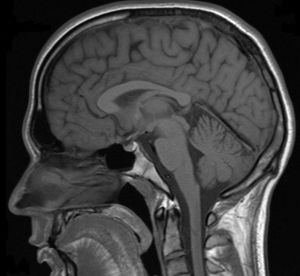
The fear and confusion in the limbo land would naturally lead people to research as much as they can what is possibly happening, especially with information at our fingertips with the internet. Initially I thought perhaps a trapped nerve or so, but I had also come across MS and I brought up the question about it with my science teacher at the time. The many questions swarm a persons mind and one of the most problematic things again were the kitchen doctors, who were adamant the loss of sensation was due to lack of exercise (which as mentioned in the previous post, that was the complete opposite), eye damage due to me revising on the computer, some trying to become exorcists and some even stating without any knowledge that the spinal tap would hurt me for the rest of my life as it was the same thing given to women in childbirth! Some people even accusing MSERS of lying for whatever reason went through their minds!
It was completely different from the epidural and it could possibly leave a person physical disabled if done wrong, but their presence did teach me many things in my life with MS and has prompted me to get the facts from the source to understand things in a more studied and understood manner rather than makeshift ideas! I don't intend to embarrass or mock people who tried to think out of the box, as I plan to discuss later, it really can be a huge problem.
My mini rant over! Although every MSERS experience would differ greatly compared to mine which I've briefly mentioned, the one thing many share, regardless of how much it may change or lives, is the relief of the final diagnosis. The diagnosis finally naming something we tried to figure for usually a long and dark time and a name for us to work with, although our future may have felt even more of a blur and a concern (many new questions arise) but developing a relationship almost with medical professionals who understand and can assist through any issues that may occur.
Take for example a very common symptom for the 'starting' of MS, the loss of sensation. Initially one may feel they had slept in an awkward position over night or the sudden weather change (which actually seemed to be something that induces a relapse), but when that feeling doesn't seem to go away and it affects even the basic daily rituals like having a shower and the water feels hotter or colder than usual or walking down the street takes more effort than usual, it leads a person into a land of limbo.
Because of the nature of the human body, the nerves are repaired to a certain amount ( will be discussed later on) so after the first few times the relapses may occur, it can easily go to the back of our minds, especially if you are busy in things like work or studying ( I was at the start of my GCSEs when it crept up on me), the diagnosis is delayed further. When the same things keep occurring over and over again, we would attend our GP surgery, the last thing on a general practitioners mind would be MS, so the immediate things are tested first, like things like diabetes ( especially if you're Asian and it's almost a norm in your family like me!) And this can easily lead to a misdiagnosis, many people have been diagnosed with lupus (an inflammatory disease caused when the immune system attacks its own tissues) due to a main symptom shared by both conditions ( fatigue).
The next 'stage' being when relapses continue to occur and are worse than at the beginning and you go from acing your exams to being perceived as dyslexic. Then you'd see a specialist (mine being exactly like DR. House from the TV series!) who would carry out even more tests which can be even more worrying! Those tests usually being blood tests ( to eradicate things like diabetes), neurological examinations and evoked potential tests (the assessment of responses and measuring the time it takes for nerves to respond to stimulation), then the big two being a spinal tap ( fluid taken from a patients lower back to see whether there is abnormal of white blood cells present) and how most people are diagnosed with MS, MRI scans which display damaged nerves ( see pictures below, a normal brain, the first being me, the shiny dots displaying damaged nerves) my teachers really didn't lie when they called me a 'bright' lad!
The fear and confusion in the limbo land would naturally lead people to research as much as they can what is possibly happening, especially with information at our fingertips with the internet. Initially I thought perhaps a trapped nerve or so, but I had also come across MS and I brought up the question about it with my science teacher at the time. The many questions swarm a persons mind and one of the most problematic things again were the kitchen doctors, who were adamant the loss of sensation was due to lack of exercise (which as mentioned in the previous post, that was the complete opposite), eye damage due to me revising on the computer, some trying to become exorcists and some even stating without any knowledge that the spinal tap would hurt me for the rest of my life as it was the same thing given to women in childbirth! Some people even accusing MSERS of lying for whatever reason went through their minds!
It was completely different from the epidural and it could possibly leave a person physical disabled if done wrong, but their presence did teach me many things in my life with MS and has prompted me to get the facts from the source to understand things in a more studied and understood manner rather than makeshift ideas! I don't intend to embarrass or mock people who tried to think out of the box, as I plan to discuss later, it really can be a huge problem.
My mini rant over! Although every MSERS experience would differ greatly compared to mine which I've briefly mentioned, the one thing many share, regardless of how much it may change or lives, is the relief of the final diagnosis. The diagnosis finally naming something we tried to figure for usually a long and dark time and a name for us to work with, although our future may have felt even more of a blur and a concern (many new questions arise) but developing a relationship almost with medical professionals who understand and can assist through any issues that may occur.
Subscribe to:
Posts (Atom)